
◆Roll of Graphite Sheet Film –
(>10 ohms/square, 15um~40um)
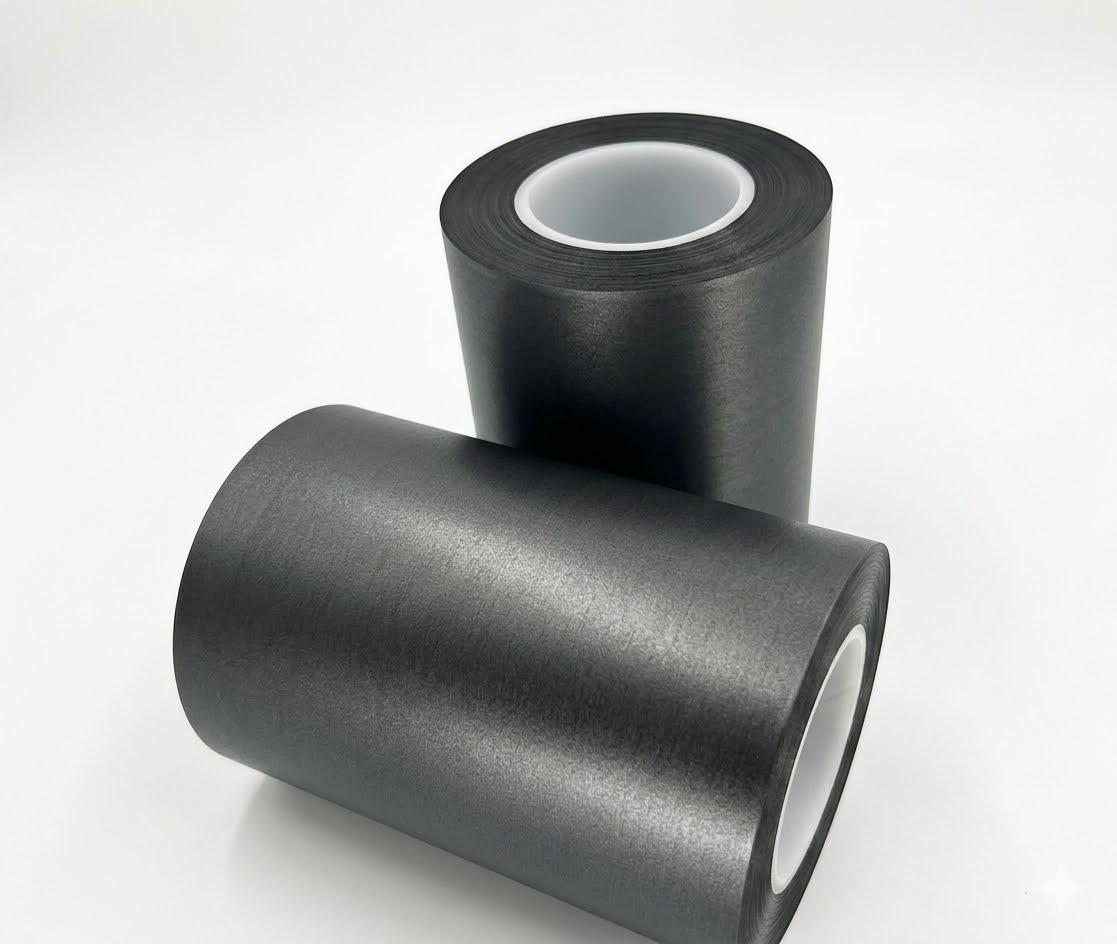
Roll of Graphite Sheet, EMI Graphite Film
Graphite Sheet has higher EMI Shielding
Carbon nanotube (CNT) conductive films are coating the carbon nanotube on carbon paper, achieve a sheet resistance of less than 10 ohms per square with thickness 15um~40um and are suitable for applications such as EMI shielding, battery electrodes, and other conductive uses. Carbon nanotubes are hollow, tubular carbon nanomaterials characterized by excellent electrical conductivity and mechanical strength, as well as a high specific surface area and chemical stability; they serve as indispensable additives in modern functional materials. Like graphene and carbon black, they exhibit outstanding electrical and thermal conductivity.
Roll of Graphite Sheet, EMI & Thermal Graphite Film
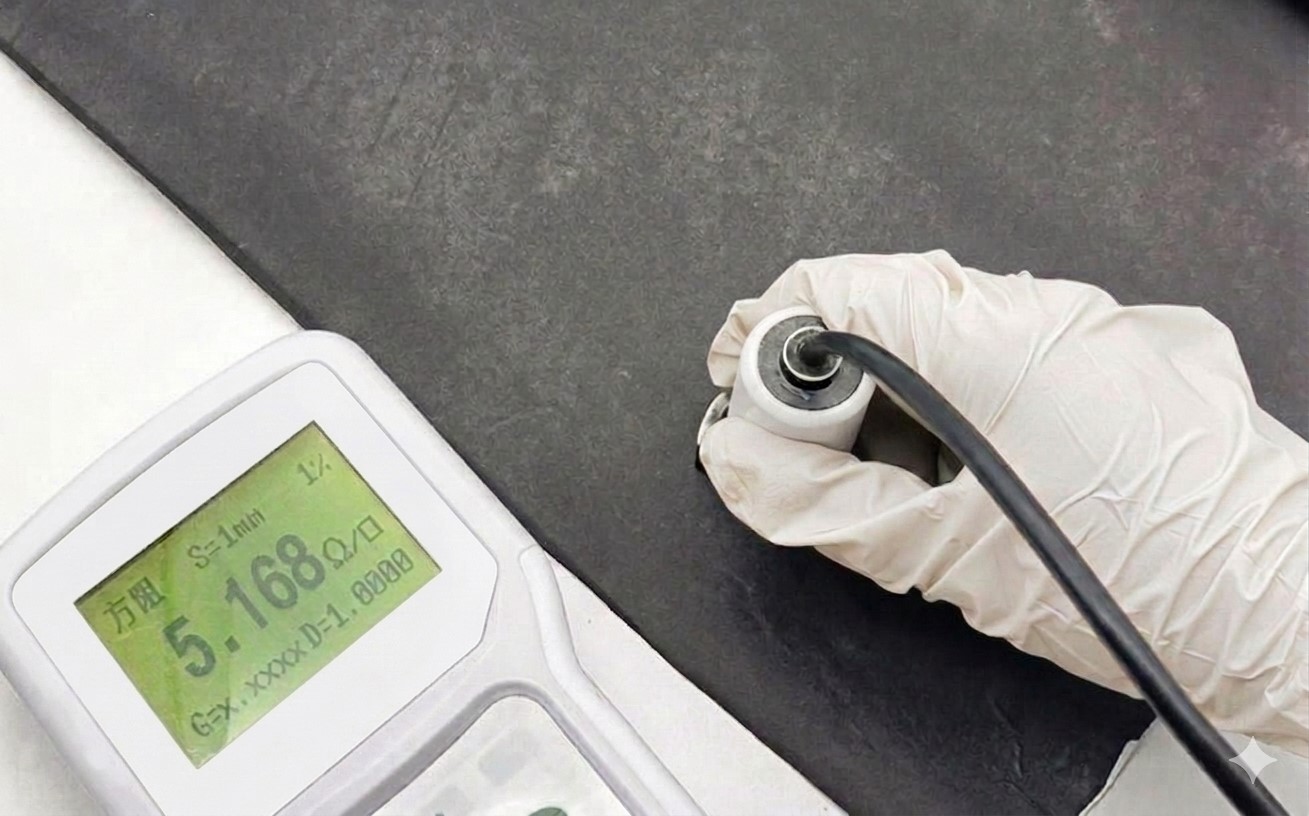
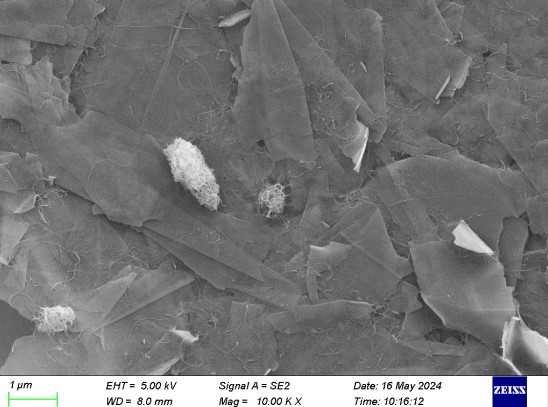
Carbon Nanotube-Graphene Conductive Film with low resistivity
◆Carbon Nanotube-Graphene Conductive Film – Offers a sheet resistance of less than 10 ohms/square with thickness 15um~40um
Replace Artificial graphite sheets of PI Polyimide for conductivity and EMI
Carbon-based Nanomaterials
Carbon-based Nanomaterials
Carbon Nanotube-Graphene Conductive Film
Carbon-based Nanomaterials (CNTs, Graphene):
Properties:
Both carbon nanotubes (CNTs) and graphene possess extremely high intrinsic thermal conductivity and excellent mechanical strength. CNTs, due to their one-dimensional structure, are ideal for vertical heat transfer; while two-dimensional graphene excels at in-plane lateral heat diffusion.
1. Superior Electrical Conductivity: Extremely low resistivity allows for rapid electron mobility, offering potential for future applications in smaller, faster next-generation semiconductors and supercapacitors.
2. Excellent Thermal Conductivity: Exceptionally high thermal conductivity enables rapid heat transfer and dissipation, making it suitable for smartphone heat spreaders and high-performance batteries.
Electronic Devices: Used as conductive coatings for components such as circuit boards, touch screens, and sensors to enhance device performance and stability.
Energy Sector: Serves as electrode material or current collector coating in energy storage devices like lithium-ion batteries and supercapacitors, improving energy density and charge-discharge efficiency.
Electromagnetic Shielding: Used to produce electromagnetic shielding materials that effectively block electromagnetic interference, protecting electronic devices from external electromagnetic environments.
Anti-static: Applied as an anti-static coating in scenarios requiring static protection, such as for electronic product protection and PCB anti-static applications.
Applications:
Nano-composite TIMs: Adding CNTs or graphene as fillers to traditional TIM matrices can significantly improve their thermal conductivity.
CNT-based TSVs: Compared to traditional copper TSVs, CNT-filled TSVs have lower CTE, better matching the thermal expansion of silicon, and exhibit superior anti-electromigration capabilities at high current densities.
Graphene-CNT Hybrid Heatsinks/Radiators: Combining the advantages of both, achieving efficient multidimensional heat dissipation.
CNT Array TIMs: Utilizing vertically aligned CNT arrays as TIMs promises to achieve extremely low interfacial thermal resistance.